This is an interesting question. On the surface, you would think not. They can’t eat brick so a home made of bricks is impermeable to termites. Right? But if we look closer, we’ll see invidous termites are and how termites can infest brick homes.
This is a question that pops up a lot, can termite infest my brick home? We know that they can’t eat brick, so therefore a brick home is safe right? Not so fast. Brick home are definitely not safe from termites.
Spolier alert, brick homes aren't safe from termites
In case you were hoping to be assured that your home was completely safe, the answer is no. You're not. Termites can and do infest brick homes. For more information read on. Or if you're in a hurry just watch the video at the end of the article.
Even the house of bricks is made with sticks
How much timber is in this home?
In the Three Little Bears, they had a house made of straw, a house made of sticks and a house made of bricks. In real life, it’s not that simple. A house can be made of all of these materials. Even a house made of bricks can have a thatched roof. And a house made of bricks almost always has timber frames, window and door trims or other timber.
Richard is constantly finding termite damage in the roofspace and sub-floor of brick homes. He’s also seen many a lintel, window frame and door frame that was destroyed by termites. Recently he attended the house of a lady whose dog had put its paw through the skirting boards. That home may have been made of bricks but the skirting boards were not.
Termites love timber frames
Steel frames are becoming more popular in Australia but the majority of homes, including brick homes, will have timber frames. That poses a significant termite risk. Richard has seen top plates that were completely destroyed by termites. That’s a risk for brick homes as well as others.
How termite enter your brick home
How much timber is in this home?
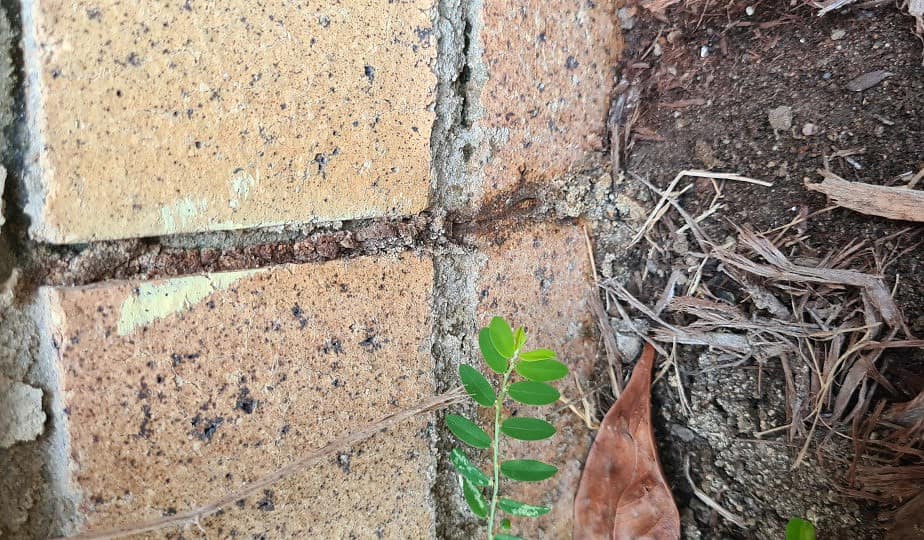
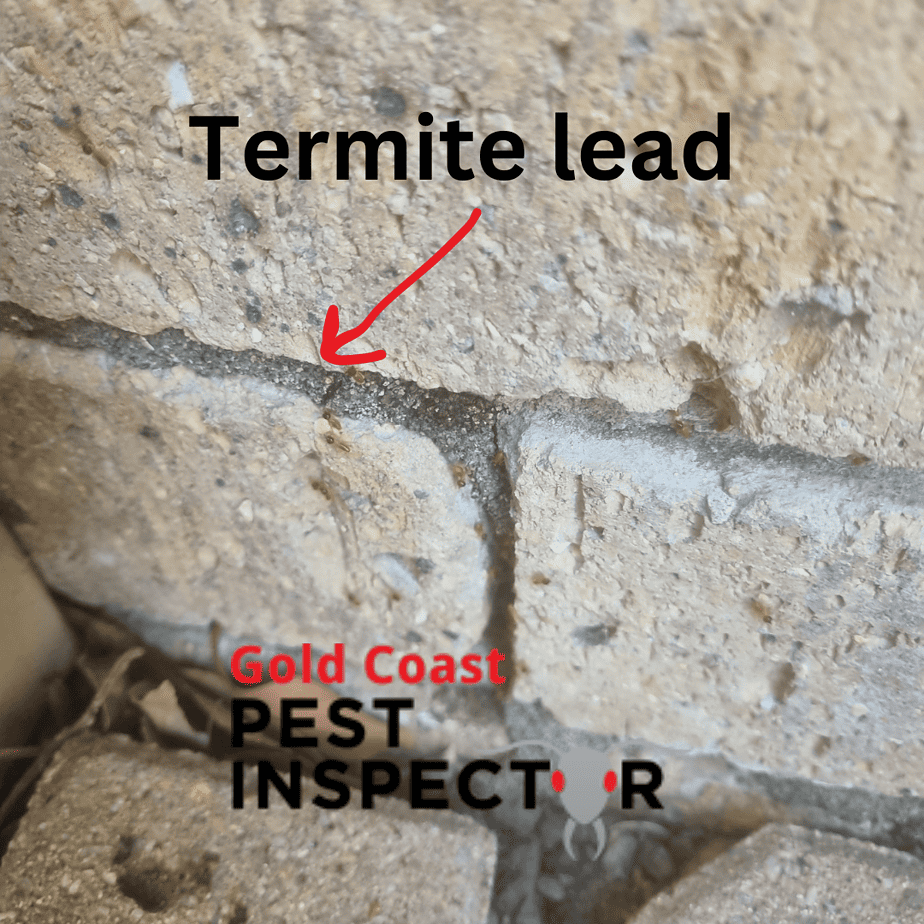
The image here shows termites climbing a brick wall. That picture was taken by Richard as part of a termite inspection. More commonly he’ll see termites in the sub-floor, where conditions are darker and damper, climbing the bricks.
Termite mud tubes
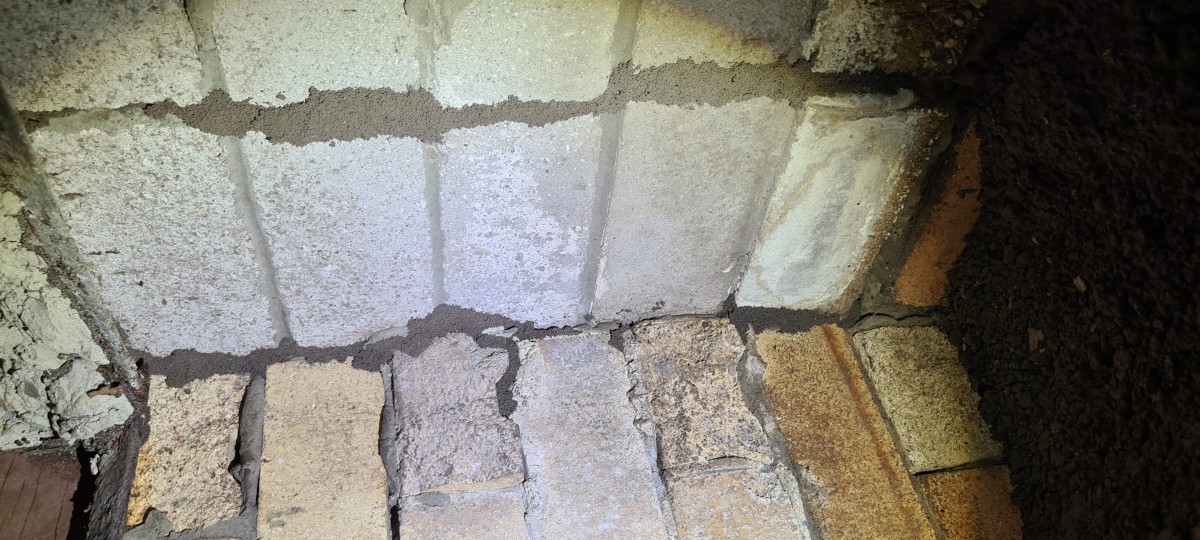
Termites use mud tubes, like in this photo, so they can move up and down bricks without being exposed. They’re subterranean creatures so when the have to move above ground they build these tubes. They’re terraforming an underground environment above the ground. It’s clever. It also means they can move up bricks and enter the home above. Where they might find yummy timbers to eat.
Check out the images below and you’ll see a variety of termite mud tubes climbing brick walls.
There are circumstances that make brick homes safer in some ways and vulnerable in others.
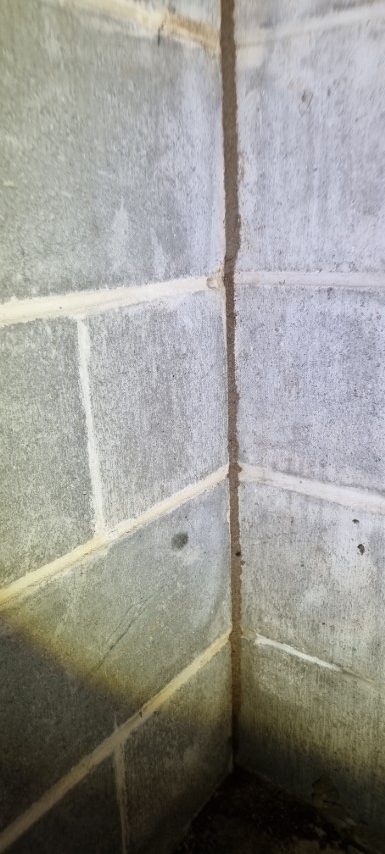
Let’s look at this image as an example.
The brickwork and concrete stumps go from floor to ceiling. That ceiling is also an open ceiling, meaning termites would be visible there. In this home we see that they have two things working in their favour. They have all that brick and concrete that termites can’t eat, and they have few places for the termites to hide. That gives them a considerable advantage they wouldn’t have if this was all timber.
Notice the lime rising out the concrete at the bottom. They do have a problem with damp on the outside. Behind that wall, there are brick pavers that termites could tunnel under to gain access to the home. One part of the downstairs areas is clad. This introduces a vulnerabilty, leaving a way for termites to come in under the pavers and reside in the walls without anyone knowing. Remember, damp is your enemy.
But don't take it for granted
In this second home we’re looking at, you can see the line of termite mudding running up the brickwork. You can see that this enclosed space is quite damp. This makes for perfect conditions for termites. Whereas the first home was exposed, allowing us to see termites before they found timber, this home has a nice dark space for them.
This mud tube they’ve made allows them to enter and exit the home above without exposing themselves. And despite being made of brick, this home has plenty of timber for hungry termites. The framework, windows sill, skirting boards, etc, are all made of timber.
You can clearly see below, this brick home was not safe from termites.
Le't's Draw Some Conlcusions About Why One Brick Home Was Safe But Not The Other
Okay, to summarize what we learnt below, it’s all about conditions. In the first home we saw that the brick was open, dry (but with some risk from damp) and any termites that did come in would be visible.
In home two it is enclosed, damp and and (unless you get an inspection) the termites would not be visible. There is also a mud floor in the second home. This is the subfloor we’re looking at after all. Termites can travel along through the mud and climb up into the home above. That’s exactly what happened in the photo shown.
Importantly, home one also gets regular termite inspections. And they have an ATBS installed. We did find some historical evidence of termites in this home. We also found termite activity in one the bait stations. They’ve had no termite issues in the home though.
Brick and timber. Even brick homes have timber. Termites have an uncanny knack of finding it.
A Tail Of Two Brick Homes, Safer/Not Safe From Termites
What these two examples show you is that a brick home can offer some advantages in the fight against termites.
In some circumstances.
But a brick home is in no way safe from termites.
The best way to ensure you home is safe from termites is with a termite inspection.
Lots Of Brick Homes With Termites
We’ll leave you with a gallery of brick homes that had their problems with termites. They’re a very good reminder homes aren’t safe just because they’re made of bricks.
Free Quotes On Termite Inspections
Play Video
FAQ: Can Termite Infest A Brick Home
Can termites infest a brick-built home?
Yes. Even though bricks and concrete aren’t eaten by termites, the timber frame, skirtings, door/window frames, and other cellulose-based materials behind or beside the brickwork are a target.
If my home is fully brick (including walls and slab), am I safe from termites?
No. Brick construction offers some advantages, but it does not guarantee safety. Termites can enter through expansion joints, gaps in mortar, service penetrations, or via timber elements within the structure.
What are common entry points for termites in a brick home?
Some frequent entry points include:
Cracks or gaps in mortar or bricks
Service penetrations (pipes, conduits) through slab or brickwork
Areas where soil, paving or mulch abuts the brick wall
Timber elements in contact with soil or behind façade materials
How do termites travel on or through brick surfaces?
Termites often build “mud tubes” or “leads” (soil/saliva tunnels) along or over brickwork, concrete walls or slabs, which allow them to move unseen and reach timber elements, as shown in the image below.
Are double-brick homes safer than brick veneer or timber homes?
They may offer slightly better visibility of termite activity or fewer accessible gaps, but they are not immune. Any timber components, cavity spaces or entry gaps can still allow termite access.
What signs of termite activity should I look for in a brick-home?
Indicators include:
Mud tubes on brick walls, slab edges or sub-floor walls
Timber in the structure sounding hollow when tapped
Discoloured or blistering walls/paint near the floor-line
Wings or swarmers inside the home
Moisture or damp conditions near the base of the walls
Does dampness or moisture affect termite risk for brick homes?
Yes. Damp or wet conditions (especially in sub-floor cavities, behind brickwork, around poorly drained slabs) increase risk because termites favour moist environments. Good drainage, ventilation and moisture control reduce risk.
What prevention steps should owners of brick homes take?
Key prevention actions include:
Ensure timber doesn’t touch soil or mulch against the brick wall
Remove wood piles, stumps or timber debris close to the home
Fix leaks, manage drainage and avoid soil/build-up against the base of walls
Seal gaps, maintain mortar joints, keep landscaping clear of brick walls
If a termite infestation is found behind the brickwork, what can be done?
Richard will install a termite baiting system to erradicate the termites. Early detection speeds treatment and reduces repair costs.
How often should a brick home be inspected for termites?
Given the hidden risks even in brick homes, a comprehensive termite inspection at least once a year is strongly recommended to catch activity early before major damage occurs.