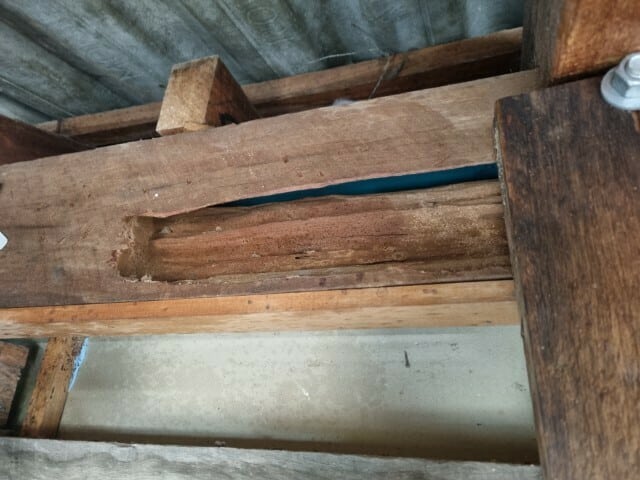
Can Termites Eat Hardwood?
It’s often accepted that termites do not eat hardwood. Termites can eat pretty much anything that is organic. But it’s not necessarily that straightforward.
Termites prefer NOT to eat hardwood
If termites are given their druthers, they’ll avoid hardwood. It’s not uncommon to see hardwood and some nice soft pine together, and the termites have tucked into the pine. Termites are like you and me in that respect. If you’ve got a nice juicy steak in front of you and a weathered old tough bit of steak, you know which one you’re going to choose. On the other hand, if you have no choice but to eat the tough one and you were hungry…you know what you would do.
Hardwood is hard to eat...until it gets damp
Termites will eat hardwood when they have to. It’s hard to eat though so they’ll be slow(er) to eat it. What can drastically change that though is the introduction of moisture. Soften the timber by keeping it damp and you have some nice soft timbers ready to eat.
Termites love damp conditions, whether it involves hardwood or not. That’s why we’re always on the lookout for damp and will advise our clients about it. See this sub floor for instance:
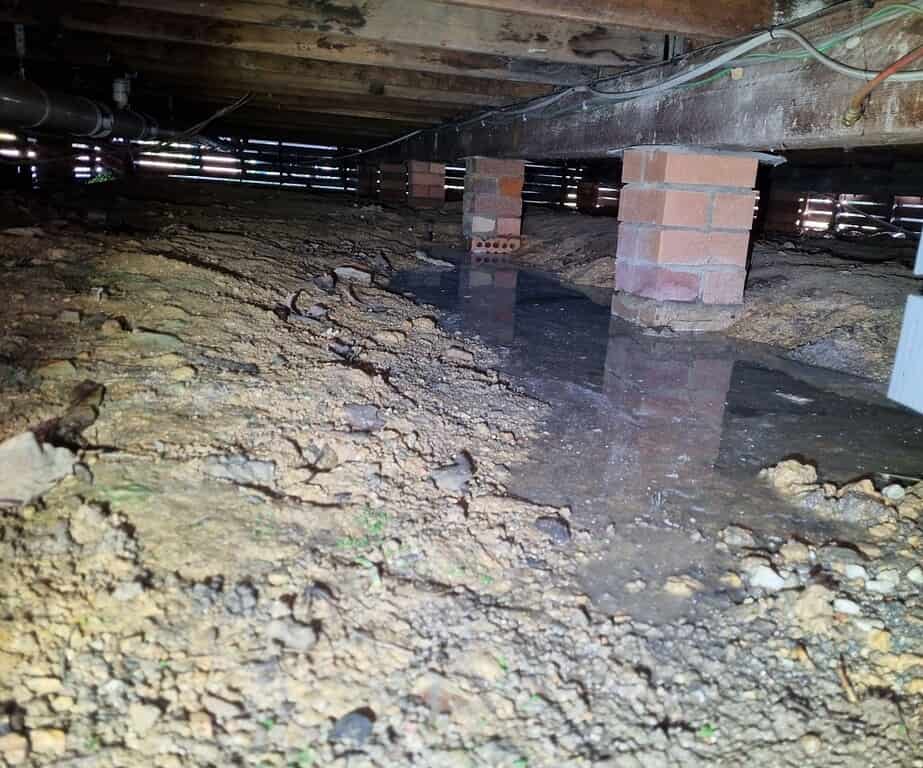
We took that photo during an inspection so we could show the owners. That kind of damp is inviting termites into your home. You’ll see in our previous article Can Termites Infest A Brick House that termites use damp to build mud tubes up those brick housing stumps into the home above. When timbers are kept moist they’ll become nice and soft and easy to eat. That’s when termites will eat hardwood timbers.
Yes, termites eat hardwood
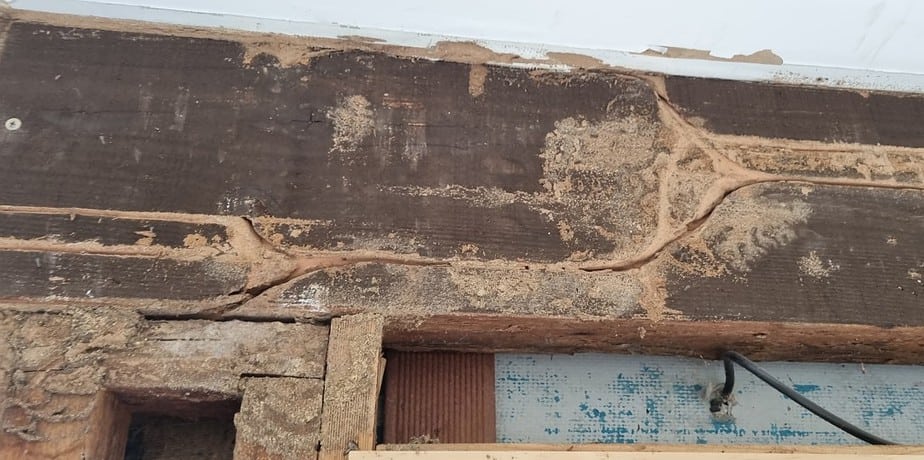
In the photo below you’ll see that termites have eaten a path through the timber. That means this timber wasn’t their preferred food source. They’ve eat a path and covered it over with mudding to make a path into the home.
In this next image is a hardwood timber where the termites have had a proper feed on it. It could have been dampness at some stage that contributed to this.
For more information on damp, read our article Damp: termites love it and you should not.
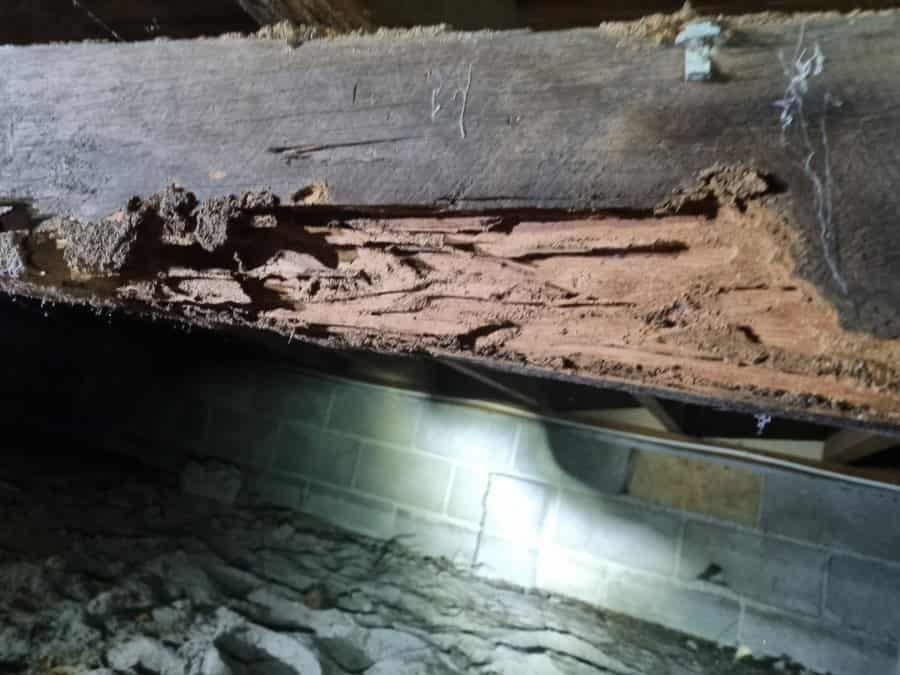
The moral of the story is you shouldn’t feel safe just because you’ve got hardwood. We’ve had builders tell us that termites don’t eat hardwood but here we are with images to prove otherwise. Use sensible precautions with termites (such as a termite inspection) and avoid allowing damp to build up.